South Africa’s agricultural sector is changing the way it thinks about energy.
While loadshedding originally drove investment in backup power, rising electricity tariffs, volatile diesel prices, improved battery technology and more accessible financing are changing how farmers approach energy management.
Battery storage is no longer simply about keeping the lights on during outages. It is increasingly becoming a strategic farm asset, helping producers reduce operating costs, improve resilience, maximise the return on existing solar investments and protect critical agricultural operations.
“Vastly improved battery technology, relentless electricity tariff increases and rising diesel costs are among the developments driving a more strategic approach to energy among South African commercial and industrial (C&I) businesses,” says Annika di Bona, Senior Project Development Engineer at Candi Solar.
“We are seeing growing demand from businesses across multiple sectors, from manufacturing to agriculture to cold chains and distribution, to implement solar PV and battery solutions and to maximise the value and flexibility of existing solar investments.”

Above: Annika di Bona, Senior Project Development Engineer at Candi Solar (photo supplied)
When Backup Power Becomes a Business Liability
Loadshedding made generators essential for many farming operations. But what started as emergency infrastructure has become an increasingly expensive operating cost.
The true cost of running a diesel generator is estimated at between R8.50 and R11.00 per kWh once servicing, fuel, logistics and depreciation are taken into account.
For farms that depend on irrigation systems, refrigeration, cold storage, dairy operations or packhouses, prolonged generator use can quickly become one of the largest operating expenses.
“Relying on the grid and generators alone is no longer viable for businesses focused on cost savings, operational resilience, return on investment and long-term competitiveness,” notes di Bona.
Next Level: Strategic Energy Cost Management
Instead of simply preparing for power outages, many agricultural businesses are now actively managing energy as an operating cost.
In practice, this means combining solar PV, battery storage and grid electricity to reduce diesel consumption, improve energy security and lower electricity costs throughout the day.
This is made possible by advances in Battery Energy Storage Systems (BESS), together with easier retrofitting and more accessible financing.
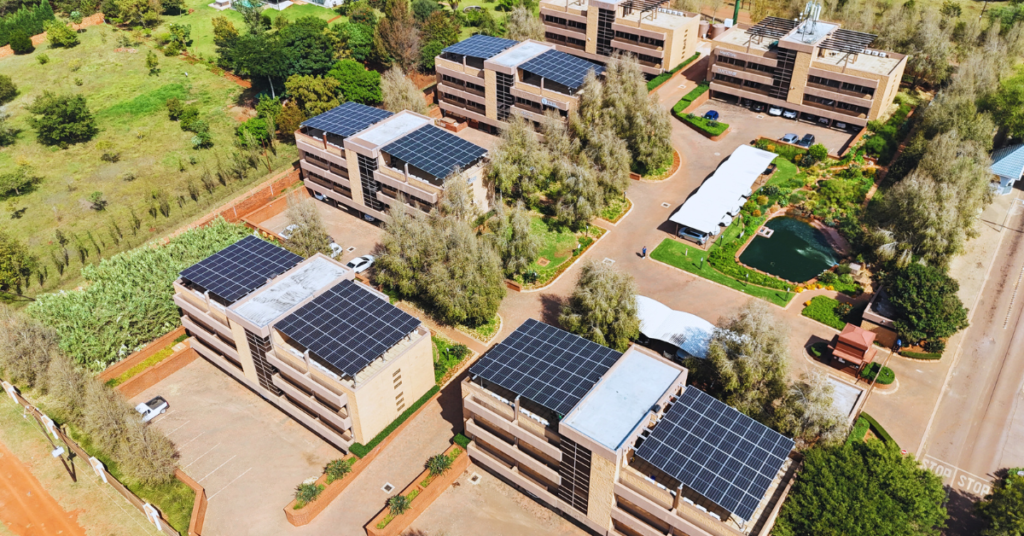
Above: Candi Solar installation (photo supplied)
The Shift to Solar + Battery
Many farming operations have already invested in solar PV to reduce dependence on the grid and diesel.
However, the real evolution happens when batteries are added. Battery storage is no longer just backup infrastructure. It has become a cost-management tool that enables farmers to store and use energy more strategically while improving the return on their solar investment.
As a result of lower hardware costs, tax incentives and improved battery technology, solar payback periods have fallen from as much as ten years historically to as little as two to three years today.
Di Bona adds that battery solutions can be tailored to operational priorities, whether protecting irrigation systems during pumping schedules, maintaining refrigeration for harvested produce or ensuring uninterrupted power to dairy and processing facilities.
For farmers, reliable electricity is no longer simply about avoiding downtime. It directly affects crop quality, animal welfare, production schedules and profitability. Battery storage is helping agricultural businesses move beyond emergency backup towards smarter, lower-cost energy management.
Double the Value of Battery Storage
Battery storage and solar are used not only for resilience but also to actively reduce energy costs.
Businesses are increasingly using battery energy storage systems (BESS) to store cheaper electricity for use during expensive peak tariff periods, a strategy known as energy arbitrage.
Battery systems also support peak shaving by reducing maximum demand charges, helping agricultural businesses lower electricity costs while making better use of existing solar generation.
For farms with solar PV installations already in place, adding battery storage transforms a daytime asset into an around-the-clock energy management system.
Smoothing the Shift
Two developments are making battery storage increasingly accessible for agriculture.
Modern modular battery systems can be added to existing solar installations with minimal disruption, while structured financing options such as PPAs, leasing arrangements and per-kWh billing models are reducing the need for significant upfront capital investment.
“The acceleration of BESS financing marks a fundamental shift in how South African industries think about energy infrastructure,” says Di Bona.
“Many businesses are recognising the value of working with specialist partners that design, install and manage these systems throughout their operational life, allowing farmers to focus on production while ensuring their energy infrastructure performs as intended.”
Future-ready farming
Agricultural businesses adopting integrated energy strategies that combine solar PV, battery storage and intelligent energy management are also positioning themselves for future developments such as energy wheeling, virtual power plants and AI-driven energy optimisation.
“Energy is becoming another farm input that can be actively managed rather than simply paid for,” says Di Bona.
“Farmers who begin treating energy as a strategic asset today are likely to be in a stronger position to improve resilience, control costs and remain competitive over the long term.”
Featured photo: Robert So on Pexels.
Relevant Agribook pages include “Renewable and alternative energy.” The Business Listings below comes from that page.