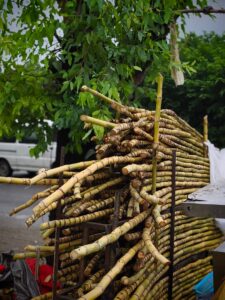
Trade, Industry and Competition Deputy Minister Zuko Godlimpi and the Deputy Minister of Agriculture, Nokuzola Capa, will lead an interactive stakeholder dialogue with sugarcane growers at the Sezela Illovo Cricket Sports Field, in the South Coast of KwaZulu-Natal, on Friday.
The Grower Imbizo will be hosted by the Department of Trade, Industry and Competition (the dtic) and the Department of Agriculture (DoA), in partnership with the South African Sugar Association (SASA).
The dialogue will be preceded by a visit to sugarcane farms by the two deputy ministers. This will take place on 17 September 2026.

According to Godlimpi, the South African government recognises the critical role that sugarcane growers play in the value chain of the sugar industry in the country.
The farm visit will provide an opportunity to assess the realities on the ground and identify practical interventions that can support the long-term sustainability and competitiveness of the sugarcane value chain.
“Sugarcane growers are an important component of the sugar value chain, and a critical stakeholder that government should always take along in the implementation of the Sugarcane Value Chain Master Plan to 2030.
“The Master Plan is a signed partnership agreement, with representation from the two grower associations, namely the South African Farmers Development Association (SAFDA) and the South African Cane Growers’ Association (SACGA).
“We will be using the dialogue to provide them with an update on the implementation of the Master Plan, as well as engage them on the key challenges currently facing the industry, with a view to finding long-lasting solutions,” said Godlimpi.
The Master Plan was developed to address several challenges faced by the industry to ensure its long-term sustainability. Phase Two of the Master Plan, which was adopted by all stakeholders in April this year, aims to shift the sugar sector from recovery to long-term sustainability through product diversification.
So far, the Master Plan process, emanating from Phase 1, has identified several possible product diversification opportunities such as bioethanol for fuel blending, sustainable aviation fuel, bioplastics and cogeneration.
Phase 2 will be characterised, among others, by the ramping up of efforts aimed at delivering a diversified sugarcane-based industry.
Godlimpi said the discussions will also cover planning and preparedness for the upcoming growing season (including potential impact of El Nino), skills and capacity challenges, sustainability of grower operations, and possible interventions to support the industry.
“The dialogue comes soon after government has announced an intervention by providing tariff relief for the sugar industry, raising the Dollar-Based Reference Price from US $680 to US $785 per tonne and the import duty from R4.83 to R6.97 per kilograms, to protect the sector against cheap imports.
“In August last year, we issued block exemptions, to facilitate the implementation of Phase 2 of the Master Plan, for the industry allowing sugarcane farmers, millers, commercial food and beverage producers, and retailers to collaborate for the express purpose of progressing the Master Plan, without transgressing the competition law,” said Godlimpi.
Capa said the dialogue will provide an opportunity to better understand the concerns and priorities of growers, and to identify practical measures that can be incorporated into the implementation of the Master Plan.
“Our engagements with sugarcane growers will go a long way in identifying gaps affecting them and agree on practical interventions to improve access to finance, infrastructure, extension services, technical support, inputs and markets, amongst others.
“It will also be an opportunity to highlight successful projects, partnerships and interventions that are already implemented under the Master Plan, demonstrating tangible results and impact on the ground,” said Capa.
The highlight of the day will be the recognition of the sugarcane growers through awards that will be issued in various categories, including Top Commercial (Large-Scale) Growers, Top Small-Scale Growers and Top Land Reform Growers.
The sugarcane growing industry consists of more than 26 000 growers who, together with the milling sector, create at least 65 000 direct and 2700 000 indirect jobs, supporting over a million livelihoods, mainly in the deeply rural and job-starved regions of KwaZulu-Natal and Mpumalanga.
This story first appeared in SA News. Find it here.
Photo: Bilal’s Here on Pexels
Relevant Agribook pages include “Sugarcane.”