A new programme called Heal the Planet is working to significantly increase the number of small- and medium-holder farmers countrywide, upskilling them in methods that restore biodiversity, create jobs, and improve food security.
“We’re mainly working with farmers whose land ranges from half a hectare to 10 hectares and more in some areas, with a strong focus on youth and women and localised food production,” says Matthew Purkis, architect of the programme and the SAOSO Foundation’s Operations Director.
He explains there is a great need for South Africa to transition to a more ecological and sound food system: “We see so many smallholder farmers not effectively engaged in the agricultural economy, this is the challenge that Heal the Planet is aiming to resolve.”
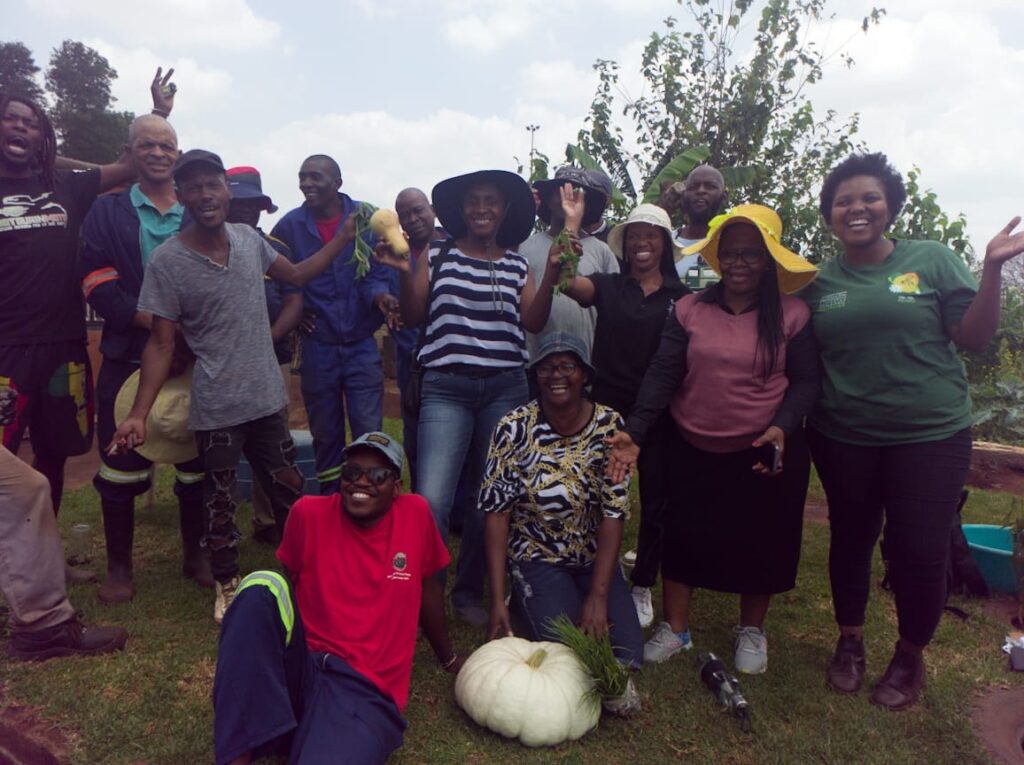
Photo credit: WWF-SA
Launched in July 2025, the Heal the Planet programme is supported by the WWF Nedbank Green Trust, funded by Nedbank. “It forms part of an ecosystem restoration and regenerative agroecology initiative led by South African Organic Sector Organisation (SAOSO), a non-profit established in 2009 to advance agroecology and sustainable farming in the country,” says Purkis. Agroecology and organic farming methods improve soil health, biodiversity, and landscapes by working with nature and avoiding synthetic chemical inputs and genetically modified seeds.
Poovi Pillay, Executive Head of Nedbank’s Social Impact Unit says: “The beauty of agroecology is that it’s not just a farming method – it is a global movement for healthy food systems that are fair, local, democratic, and rooted in care, and we are encouraged by the number of young people and women of all ages who want to farm.”
Agroecological farming begins with restoring microbial life in the soil to increase its natural fertility. This contrasts with conventional farming, which relies on chemical fertilisers that deplete soil health. Training more small- and medium-holder farmers in agroecology contributes to broader ecosystem and landscape restoration through nature positive work.
Research done for the South African National Parks (SANParks) Vision 2040, with which this project is aligned, shows that nearly 50% of South Africa’s ecosystem types are classified as threatened. Vision 2040 aims to mainstream conservation, restore healthy landscapes, create jobs, expand protected areas, and establish biodiversity corridors throughout the country.
To support farmer development, the programme establishes AgriHub and EcoHubs. “The AgriHub serves as a central resource centre for seeds, seedlings, and support,” says Purkis. “While each farmer operates independently, the group structure enables faster development, shared market access and the creation of markets within their communities.”
Heal the Planet teams in each province oversee and contribute to the AgriHub and EcoHub operations, farmer development, and ecosystem restoration.
Farmers join Participatory Guarantee Systems (PGS) groups, which certify their farms according to SAOSO’s organic standard through peer review during farm visits. PGS is a global, farmer-led movement offering affordable, quality-assured organic certification. Farmers are also trained to use digital tools such as Backstory, which supports the digital certification of PGS farms. This opens up market opportunities by strengthening traceability. By integrating PGS supply chains with other digital platforms, farmers are able to connect directly with retailers and restaurants, again improving market access and increasing income.
Crops grown include cabbages, tomatoes, spinach, carrots, pumpkins, green peppers, brinjals and beetroot. Subtropical fruit production includes mangoes, litchis and avocados, alongside medicinal plants.
“It takes about 4 years for a PGS group to reach financial viability, and we support them throughout this journey,” says Colleen Anderson, SAOSO Foundation Programme Administrator. “The Western Cape has the most advanced PGS footprint due to high demand for organic products. Many small- scale commercial farmers are leading the way, and our farmers can learn from them.”
AgriHubs are being established in several areas in the Western Cape, including the Cape Flats (mainly Philippi) and the Swartland (around Malmesbury and Piketberg). Most farmers here work on 5 to 10 hectares, growing seasonal vegetables, medicinal plants, and commodity products. The Philippi horticultural area has about 80 farmers, while the Swartland has 20, with potential to grow.
In Mpumalanga, AgriHubs are located at the Ratanang Farm (Bushbuckridge Municipality), New Forest (Northern Bushbuckridge), and the Kruger buffer zone. “New Forest includes a failed government irrigation scheme on 2,500 hectares with 500 title deeds,” Purkis explains. “We hope to develop a significant number of farmers here. About 75 women and youth farmers have started the programme, focusing on fruit, vegetables, and traditional medicinal plants, and we are also looking at diversifying into fibre, mainly hemp. There are also opportunities for agro-processing and exporting mangos, litchis, avocados and marulas.
“In the Eastern Cape, work is just beginning. We’re building partnerships with organisations already working with farmers, women, and youth,” says Purkis.
“These areas were selected because they align with WWF South Africa’s priority landscape. Heal the Planet supports WWF’s Strategy 2025, which aims to build sustainable, inclusive, regenerative agricultural value chains, expand PGS-certified biodiversity-friendly farms, and scale conservation-agriculture models to drive landscape-wide restoration across South Africa,” concludes Purkis.
Press release as found at www.greentrust.org.za/2026/03/09/expanding-biodiversity-positive-smallholder-farming-across-south-africa
Relevant Agribook pages include “Organic and sustainable farming.”