We had finished the distillery tour and moved towards the reception area where a light lunch was to be served along with the last stewardship talks.
The tour party gathered in two’s and three’s and viewed items in the reception for sale (specifically the Rockjumper gins). Some put their names down for when the whisky becomes available, or broke loose to make phone calls or tap notes on laptops. The refreshments did not include gin but Pringle Rock Distillery tours do have an option for gin tasting.
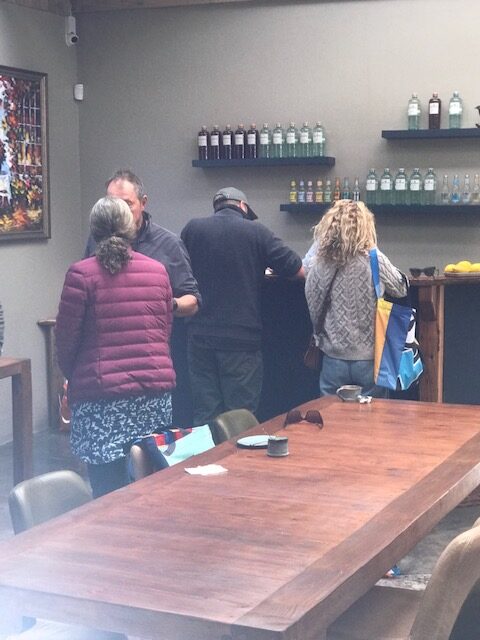
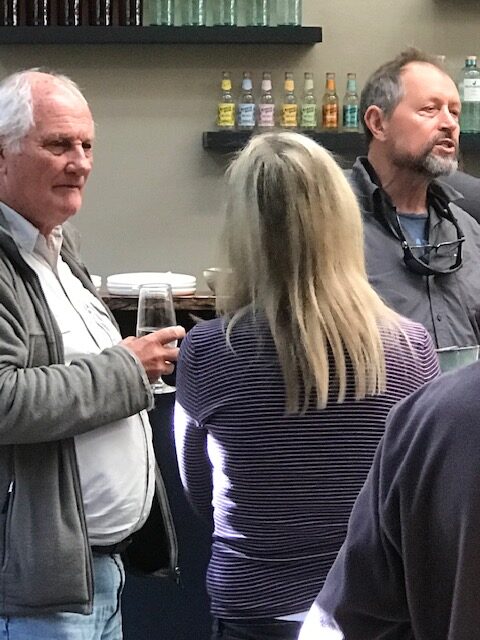
Above: Speaking to Atwell is Sheree Bega. Find her account of the trip for Mail & Guardian here.
We have mentioned before the vital role played by private landowners in securing the biodiversity that lies outside of formally protected areas in the Kogelberg Biosphere and the Kogelberg buffer zone of which the Rooiels Corridor is a part. During the course of the day I had overheard several conversations between role players about the progress of this consolidation, the sharing of suggestions and ideas of how to take it further.
Jan Coetzee, Land Programme Manager with WWF, and Shaquille Benjamin, WWF Intern addressed us on stewardships, WWF’s work and what is in it for landowners.
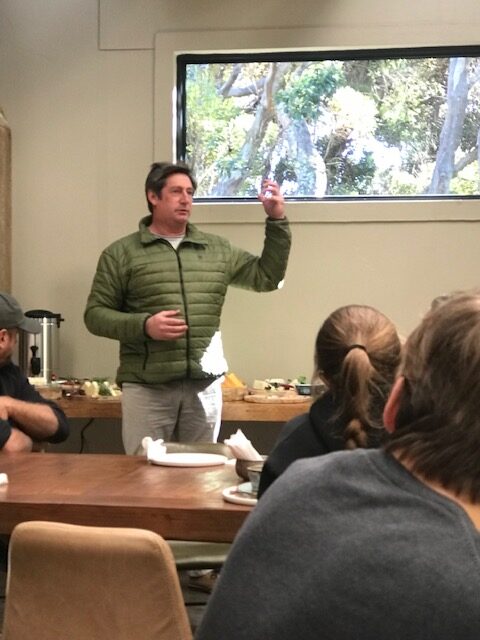
Under stewardships, landowners care for their own properties and are supported and advised by conservation staff. The higher categories of stewardships obviously attract greater incentives and support.
Stewardships begin with the Conservation Area level which includes conservancies. [Find the Rooiels Conservancy Facebook page here.] This is an attractive option taken by farmers [see our “Conservancies and farming” page], and since they often team up with adjoining farmlands, corridors are created for wildlife and greater awareness instilled in districts.
The next levels are the Biodiversity Agreement, a contractual agreement between the landowner and provincial nature authority; and the Protected Environment, which includes declaration S28 of the National Environmental Management: Protected Areas Act (NEM:PA/NEMPAA).
The highest level is the Nature Reserve, which includes declaration S23 of the NEM:PA. The farm that had been bequeathed to WWF-SA that we had viewed earlier in the day was in the process of being declared a Nature Reserve, as was Honeycomb Mountain, a property further on from Pringle Bay. The owner, Ashleigh van Zuydam, would be the next to address us.
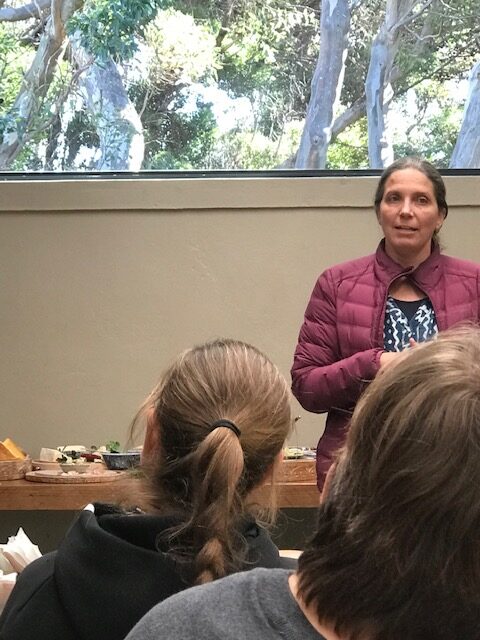
Van Zuydam described how she and her husband Ian had come to acquire the land, and again we heard a person describe herself as a custodian of the land rather than an owner. She described the fauna and flora on the property, including the species of conservation concern.
She described how supportive WWF-SA had been with the paper work, access to funding and the preparation for post declaration management. She champions eco-tourism as holding potential to landowners. They run two cabins – The River Retreat – for people who want to hike in the area or simply get away from the rat race. The website provides some ideas of possible tourist activities, and her blog on what they have done can be read here.
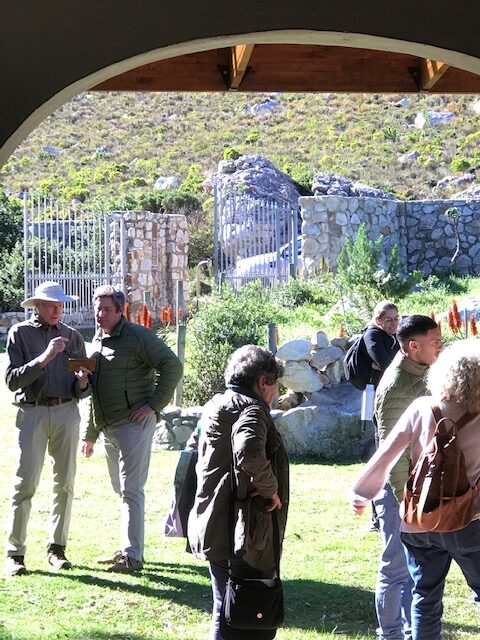
After the talks people refilled their plates and continued informal discussions in the reception room or standing outside.
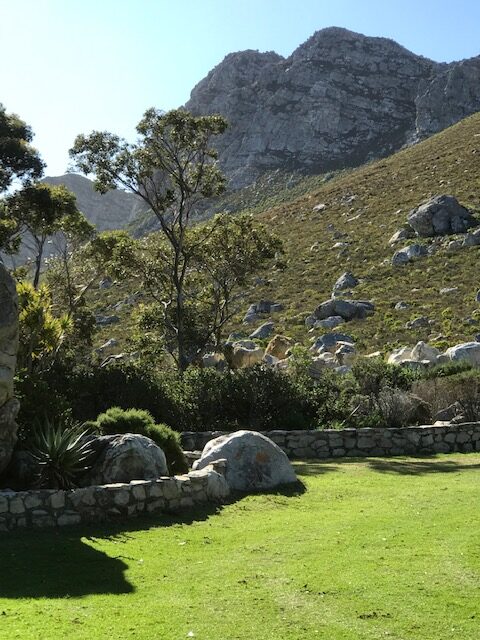
Those mountains!
I had so enjoyed the hours in this pristine part of the country, being here again.
People were leaving and soon a small party boarded the Pringle Bay Distllery shuttle and we began making our way back to Pringle Bay and then to Cape Town International Airport.