Press release
Without young people’s involvement, there can be no sustainable future for agriculture and food production.
The agricultural value chain already extends far beyond the farm gate, and scarce skills are becoming increasingly sought after; yet perceptions of careers in agriculture do not always keep pace with reality. Youth Day shone a spotlight on how the industry can inspire the next generation to take their place in one of South Africa’s most important economic sectors.
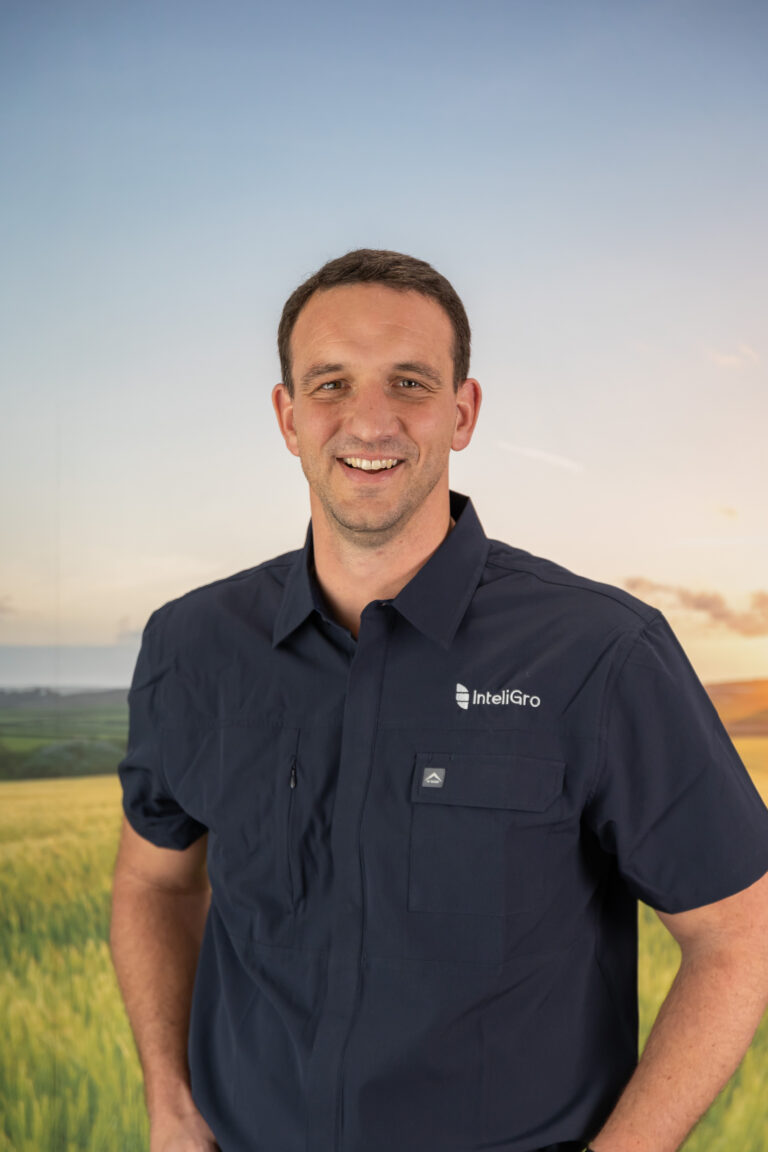
For AJ Griesel (above), Managing Director of InteliGro, the conversation about youth in agriculture is ultimately a conversation about the future of the country.
“When we invest in young people, we are not only investing in future careers. We are investing in food security, economic growth and the future of rural communities. Strong agricultural communities are essential for rural development, and this is something that deserves far greater attention as a country.
“When participation in communities declines, it does not affect farms alone; the social and economic fabric of entire towns and regions begins to weaken.
“That is why our Crop Advisors do far more than provide technical support. They are active participants in the communities where they work. And that is why the conversation about youth in agriculture is about far more than career choices. It is about who the next generation of producers, specialists, researchers, technologists, engineers, marketers, entrepreneurs and community leaders will be.”
As a young man, Griesel had two great ambitions: to play rugby and to farm. After starting his career as a management accountant on a farm in Ceres, he realised he never wanted to work outside the agricultural sector again.
THE VALUE CHAIN EXTENDS FAR BEYOND THE FARM GATE
“If you go back 30 years, many people would have said agriculture was not a particularly attractive career. Today we see a very different picture. Agriculture is one of the most diverse and integrated industries there is.
“The value chain creates opportunities not only on the farm, but also in logistics, marketing, finance, technology, research and exports. It is no longer simply ‘father and son on the farm’; it is fathers, sons, daughters and entire families adding value in different ways. We see this especially in the livestock sector and increasingly in the crop sector, where extensive service and support industries are growing alongside primary production.
“In sectors such as fruit exports, new business models have created hundreds of companies and diverse professions that simply did not exist before. At InteliGro alone, we see every day how diverse the career opportunities are. There is room for people with different interests, skills and qualifications.”
“Every generation brings new ideas, technology and ways of thinking, yet the transfer of knowledge between generations remains equally important. It is this combination of fresh perspectives and established experience that drives agriculture forward.”

Alexander Gird (24) (pictured above), an InteliGro Crop Advisor in Levubu, Limpopo, agrees.
“With technologies such as precision farming, drones, artificial intelligence and data analytics, agriculture today offers far more than traditional farming. It is a progressive industry with enormous potential for young professionals and entrepreneurs. Every young person who finds their place in the industry also helps build stronger communities, food security and economic growth.”
THE SCARCE SKILLS OF THE FUTURE
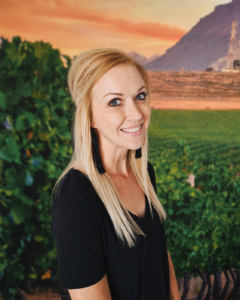
For Tanja Potgieter, Executive Manager: People Support at InteliGro (photo above), the challenge is not a lack of opportunities, but rather that young people are often unaware of them.
Potgieter, who grew up on a farm in Groblersdal, believes practical exposure is key: farm visits, career days, internships and even better use of social media to showcase the full spectrum of career opportunities.
“Many people still see agriculture as physical work on a farm. They do not realise how broad the industry is or how many different career paths it offers. I believe the people who will make the biggest impact in future are those who can combine technology with people-centred solutions.”
“Specialist skills in agronomy, agricultural economics, engineering, environmental sciences and precision farming will become increasingly sought after. What makes these careers unique is that you are not only making a meaningful contribution to the world and the economy; you are also investing in your own future. In addition to the personal fulfilment they offer, these professions often provide good incomes, strong career prospects and a high level of professional and personal wellbeing.”
Potgieter says the conversation about careers needs to start much earlier – not only at university level, but already at school and at home.
“Children and students often do not choose agriculture, not because the industry is unimportant or irrelevant, but because they simply have not been exposed to it. Parents play a key role in shaping children’s first perceptions of possible career paths.”
FROM SCHOOL DESK TO CAREER
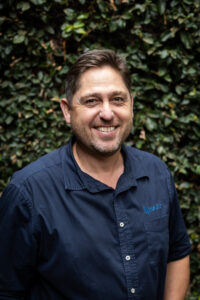
Niel Kruger, Executive Manager: Primary Business Channel at InteliGro, agrees that early exposure is important long before a young person chooses a field of study.
“Interest in agriculture often starts with something simple: seeing where food comes from, or being exposed to farming from an early age – even if it is only through tending a vegetable garden or fruit trees at home. When children experience first-hand how food is produced, they begin to understand the value and significance of the industry – from where it all starts: on the farm.”
Kruger’s own journey began with a BSc degree, after which he specialised in environmental science and entomology before starting his career as a technical specialist in agriculture. According to him, a broad scientific background creates opportunities to become involved in many different areas of the industry.
“The culture and mindset of agriculture also appealed strongly to me. It is an industry where relationships, friendships and the search for solutions play an important role.”
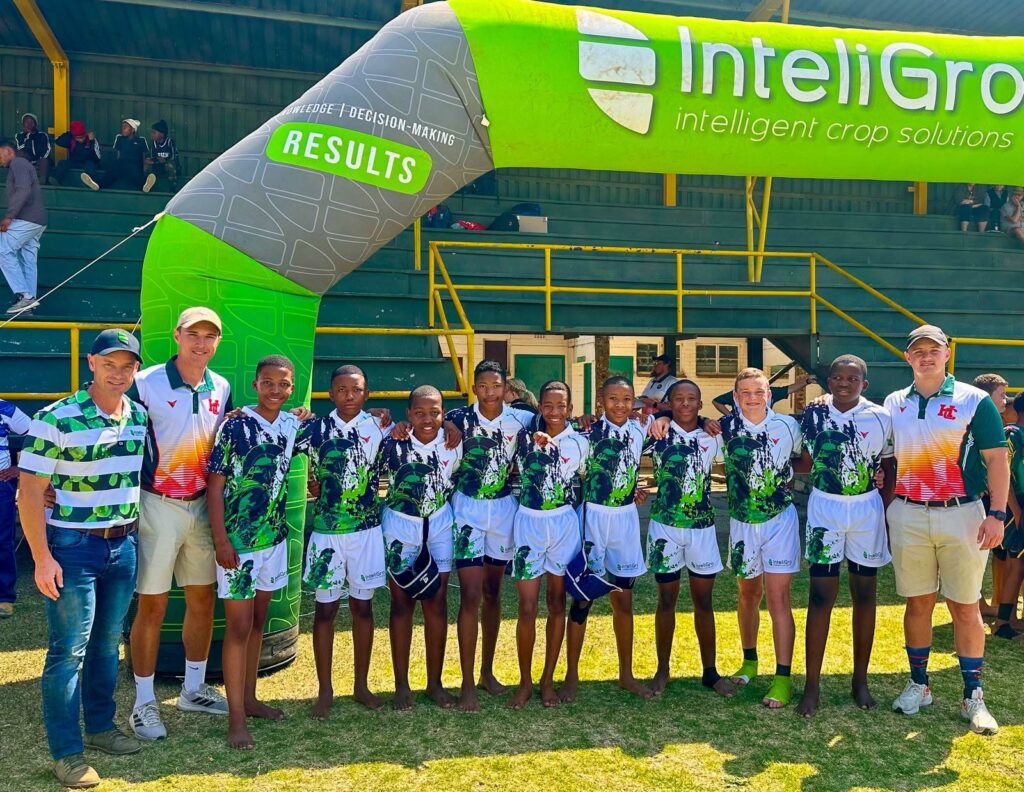
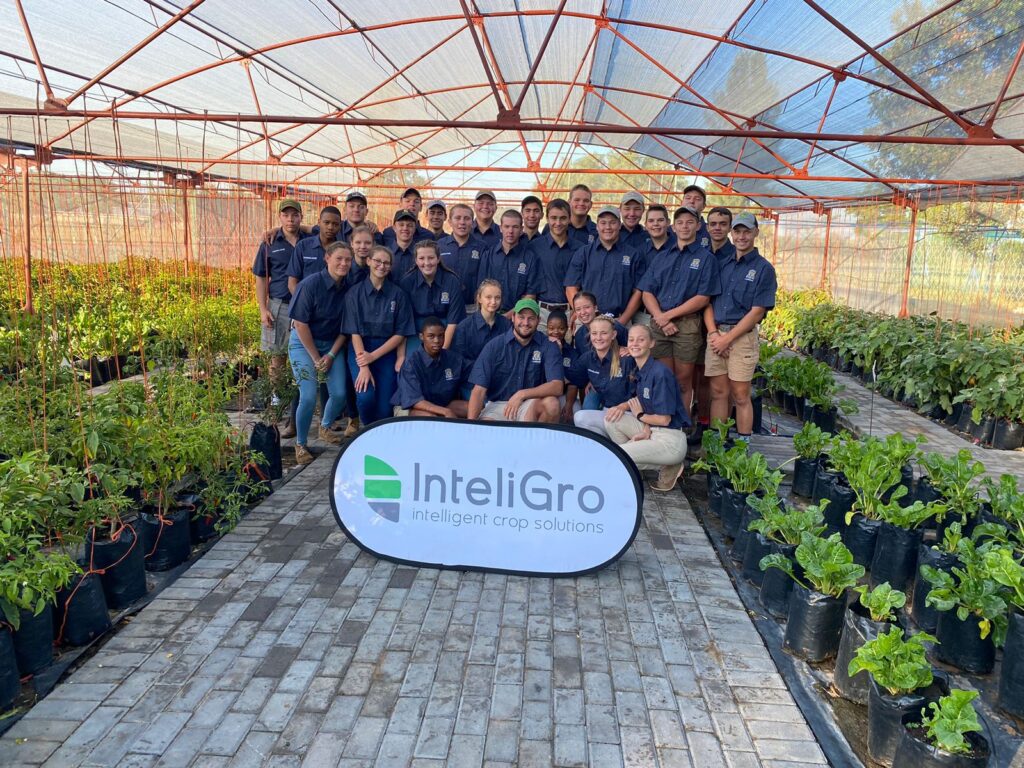
InteliGro and its Crop Advisors support agricultural schools such as Boland Agricultural High School, Oakdale and Augsburg, as well as various school and community projects across the country, ranging from agricultural trials and learning experiences to sports, infrastructure and fundraising initiatives. Staff members also regularly visit schools to engage with learners about agriculture.
At tertiary level, through its parent company WinField United South Africa (WUSA), the company also supports the Chair in Plant Health at Stellenbosch University.
“We want to encourage young talent to see how science and research work in practice, and how they are used every day to find solutions for producers.”
Kruger believes the right attitude is just as important as technical knowledge. According to him, an interest in your work and a desire to make a difference form the foundation of a successful career.
“Agriculture requires perseverance. It is not a short-term race, but a long-term investment in yourself, in nature and in food production.”
THE FUTURE BELONGS TO INNOVATORS
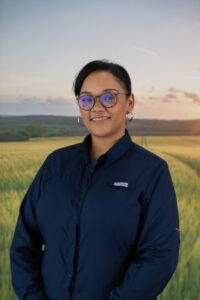
For Ebené Oranje-Swarts (31), who works in Technology and Project Management at InteliGro, agriculture is one of the few industries that touches every person’s life every day.
“My career path began in environmental science. It made me realise just how many diverse opportunities exist within agriculture, from technology and data analytics to project management, research and logistics.”
“Climate change, water scarcity and sustainability require new solutions. The next major breakthroughs will come from technology, data and smarter decision-making. Young people bring the energy and digital skills needed to address these challenges.”
Griesel agrees that agriculture offers something special: the opportunity to make a tangible difference every day and to see the results of your work.
“It is an industry where we solve problems, work alongside producers to develop better solutions, compete in international markets as an exporting nation and contribute directly to food production.”
He explains it this way:
“For many years, careers in the health sciences were the preferred choice for people with an interest in science. Perhaps this is now agriculture’s opportunity to remind the next generation that, just like people and animals, plants, soils and the broader natural environment also need care from time to time – they, too, can become unhealthy.
“You could almost say that agricultural scientists and Crop Advisors are the doctors and pharmacists of plants. Furthermore, ours is an industry built on relationships that often span generations. So, if you enjoy working with people, there is definitely a place for you.”
“I believe the challenge for us as agricultural leaders is to expose more young people to the opportunities available in the industry and to create space for them to build meaningful careers. History is full of examples where investment in young people has delivered significant returns.”
“The world of agricultural careers offers an opportunity to make a difference every day – from the communities where your own footprints lie to the global markets where our products are sold.”
Relevant Agribook pages include those in the Education, Training and Careers section. The Business Listings below come from those pages.