Press release
Before sunrise, across small plots of land stretching from the temperate rural heartlands of Southern Africa to the tropical landscapes of East and West Africa, millions of smallholder farmers begin their day.
Their work feeds families and underpins national food systems. Yet when it comes to access to finance – the credit, insurance and working capital needed to grow a sustainable business – many of these farmers remain largely invisible.
For decades, banks and insurers have viewed smallholder agriculture through a narrow lens of risk. Yields are weather-dependent. Income is seasonal. And records are informal or non-existent. The result is a persistent $65 billion financing gap.
The mismatch is stark. In many African countries, agriculture contributes up to 40 percent of GDP, yet receives only a fraction of formal lending. Smallholder farmers are frequently labelled “unbankable.” Not because their farms lack potential, but because the systems used to assess them lack insight.
The consequences are deeply felt. Without access to finance, farmers struggle to invest in better seeds, irrigation, storage or equipment. A single drought or flood can push households into crisis, forcing them to abandon farming altogether. Climate change has intensified these pressures, exposing the limits of finance models that were never designed for volatility.
The real challenge: managing risk without visibility
At the heart of the problem lies a simple constraint: data. Large commercial farms generate years of production records, satellite monitoring and formal reporting. Smallholder farms rarely do. For lenders and insurers, this lack of visibility makes it difficult to answer fundamental questions: How exposed is a farmer to climate risk? And how likely is a farmer to recover after a shock?
Without credible answers, risk is either priced too high or avoided entirely. Many AgriTech solutions have attempted to bridge this gap, but many rely on smartphones and reliable connectivity – barriers for millions of farmers. What has been missing is infrastructure that works at scale, in low-connectivity environments, translating agricultural activity into financial insight institutions can trust.
An African solution built for smallholder realities
This is the challenge eSusFarm set out to address. The Agri-Fintech is building a financial infrastructure layer for smallholder farmers – designed around their lived realities, not the assumptions of traditional finance.
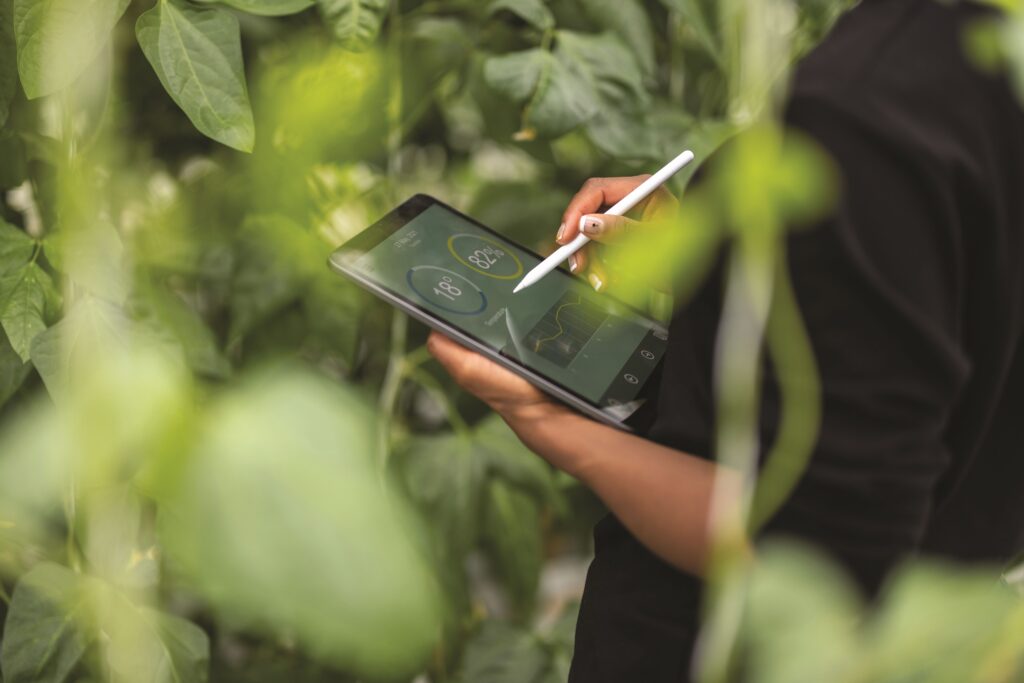
Rather than treating credit, insurance and climate risk as separate problems, eSusFarm integrates them into a single, AI-powered platform. Farmers can register and participate using basic feature phones via USSD, removing the need for smartphones or constant internet access. Behind the scenes, the platform combines satellite imagery, weather data and historical climate patterns to build a clearer picture of on-farm conditions.
Artificial intelligence models analyse this data to assess crop and yield risk, forming the foundation for parametric insurance products. When predefined weather thresholds – such as insufficient rainfall – are reached, payouts trigger automatically. There are no claims forms or lengthy delays. Funds are paid directly to farmers via mobile money, when they are needed most.
“For too long, smallholder farmers have been invisible to financial systems, not because they lack creditworthiness, but because no one has built the infrastructure to prove otherwise,” says Watson Vuyo Matsa, CEO and Co-Founder, eSusFarm. “Our role is to turn the data that already exists in the field into a financial identity that opens doors to credit and insurance.”
Turning insight into access
By translating environmental and farming data into financial intelligence, eSusFarm helps shift the economics of smallholder finance. Automated risk assessment can reduce operational costs for insurers, while insurance coverage lowers the likelihood of loan defaults. Clearer, more dynamic data gives financial institutions the confidence to extend credit into markets historically avoided.
“One of the greatest impressions the platform had on me was its ability to collect and collate farming data for smallholder farmers,” comments Nontokozo Davidson, development finance professional and Founder of Adopt-a-Farmer. “If harnessed and scaled, this will be a game changer for the industry.”
The social impact is tangible. Farmers with insurance recover more quickly after adverse weather, stabilising household income and reducing the need for distress coping strategies. Each participating farmer supports a household. At scale, these individual gains strengthen local economies, improve food security and build resilience across entire communities.
Already, eSusFarm reports strong uptake and repeat usage across seasons. Farmers consistently describe registration as easy and straightforward, with many indicating they would recommend the service to others.
Unlocking inclusion at scale
Delivering this kind of solution requires technology that can operate securely, reliably and across borders. eSusFarm uses Microsoft Azure to run its data and AI workloads – processing satellite, climate and USSD data at scale, automating risk analytics, and supporting secure deployment across multiple markets.
The Agri-Fintech has also participated in the Microsoft for Startups programme and the Microsoft and NVIDIA GenAI Accelerator, helping refine AI models and strengthening its foundation for growth.
“Our focus is helping African founders build solutions that can scale securely and reliably,” says Gerald Maithya, Microsoft Africa Transformation Office Lead. “eSusFarm shows how AI and cloud infrastructure can translate climate and crop data into faster payouts and more confidence for insurers and lenders – unlocking credit for smallholders at scale.”
Today, eSusFarm is active in parts of Southern and East Africa, with expansion underway into West Africa. The platform has engaged over 380,000 smallholder farmers, and more than 20,000 insurance and advisory users. Working with partners across mobile, insurance and finance, its ambition is to support more than one million smallholder farming households.
Future developments include more advanced AI-driven risk scoring, continuously learning models that improve over time, and expanded satellite crop monitoring. The goal is not simply to digitise agriculture, but to reshape how risk and opportunity are distributed across Africa’s food system.
“We’re not building another app for farmers. We’re building the financial rails that an entire continent of smallholders has never had access to, so that when the next drought comes, or the next opportunity, they’re not left behind,” Matsa says.