Written by PJ, owner of VELD FIRST, KAROO DIREK, DIE VEEPOS and KAROO-KALAHARI VEEVOER & LOGISTIEK
Livestock farmers and traders can minimise weight loss and loss of condition during transit, referred to as ‘shrink’, by implementing strategic nutrition, reducing psychological stress, and managing transport logistics.
‘Shrink’ consists of two types:
- Fill shrink: loss of gut content, which is rapidly recovered, and
- Tissue shrink: loss of cellular moisture and muscle mass, which takes days or
weeks to recover.
The following practices can significantly reduce body mass loss during transportation:
1. Pre-transport dietary management
- Transition to dry forage: feed livestock dry grass roughage or quality hay for at least 24 to 48 hours before loading. Avoid sending livestock straight off lush green pastures or high-moisture feeds, as these act as a laxative and accelerate
gut emptying. - Avoid extreme fasting: keep animals on feed and clean water right up until the preparation window. While withholding grain or highly fermentable feed 12 hours prior helps prevent bloating and severe trailer fouling, depriving animals of water for more than a few hours dramatically accelerates tissue dehydration.
- Preconditioning: ensure young stock are completely weaned (ideally 45 days prior) and accustomed to eating from bunks and drinking from troughs. Preconditioned calves tolerate stress significantly better and recover lost weight much faster than those ‘weaned on the truck’.
- Nutritional supplements: consider mixing oral electrolyte solutions or specific non-electrolyte nutritional supplements into the feed or water 24 hours prior to transit to maintain cellular hydration and help counteract metabolic acidosis
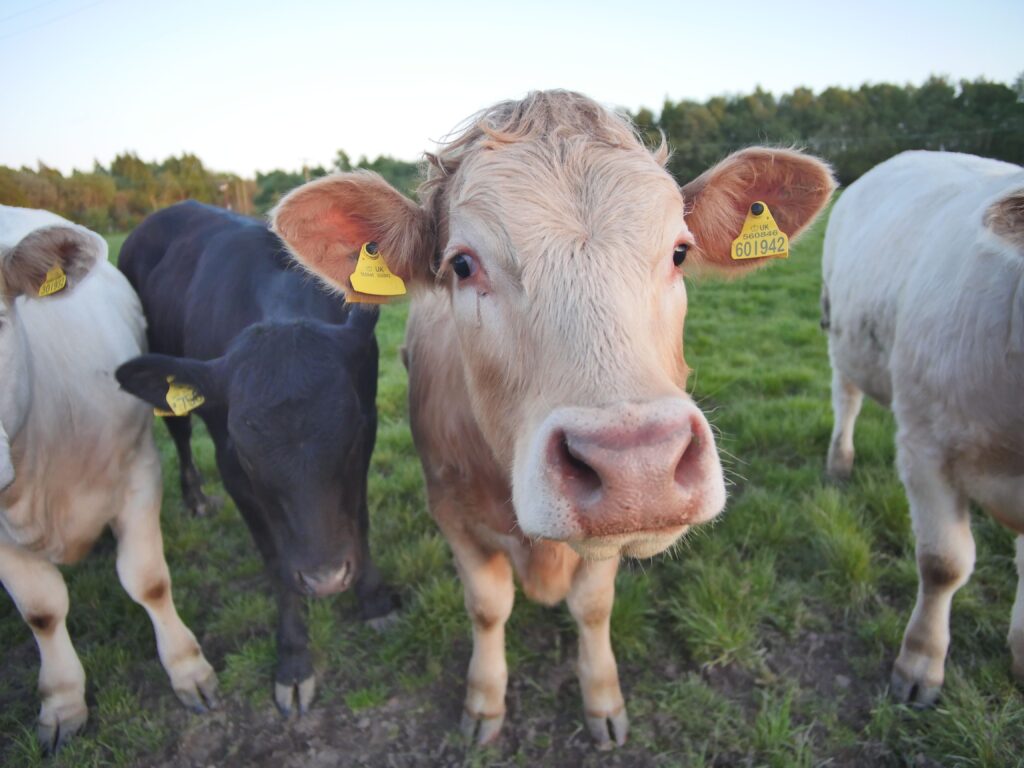
Photo: Mike Doran on Pexels
2. Low-stress handling and facility / infrastructure design
- Quiet loading practices: eliminate shouting, whistling, and the use of aggressive handlers, dogs, whips, or electric prods. Rough handling will trigger cortisol release, which causes immediate weight loss through rapid defecation and tissue breakdown. Every 30 minutes of agitated handling can cause livestock to lose an extra ~0.5% of their body weight.
- Strategic timing: gather and load animals during the cooler parts of the day, typically early morning or evening, so as to minimise heat-induced respiratory panting, which rapidly depletes body fluids. Plan around weather, time of day and temperature, and ensure that transport vehicles have adequate ventilation and non-slip/bedded flooring. In certain circumstances, transporting during the late afternoon to early evening could also be considered if visibility, security, road traffic, animals’ temperaments allow. Night-time transport comes with its own challenges and is restricted and even prohibited in certain municipal districts.
3. Transit and trailer logistics
- Optimal ‘on-board’ stocking density: calculate the space requirements accurately. Avoid overcrowding, which causes heat stress, exhaustion, and bruising. Concurrently, avoid under-loading without utilizing internal partitions; too much space causes animals to constantly slip and shift weight, increasing physical fatigue and energy expenditure.
- Vehicle environment and maintenance: use trailers with non-slip flooring (such as rubber mats or sand bedding) to give animals stable footing. Ensure excellent ventilation to regulate the temperature-humidity index inside the truck. Check that drivers have access to emergency services.
- Smooth driving and route planning: minimise transit time by planning the most direct route and avoiding unnecessary stops. Drivers should avoid sudden braking, rapid acceleration, and taking sharp corners too quickly, as the physical exertion required for livestock to stay standing accelerates tissue shrink.
- Scheduled rest breaks: on long-haul journeys extending past 10–12 hours, plan stops at approved facilities to unload, rest, feed, and water the animals to allow them to ‘fill back’ some of the lost weight.
- Provide immediate recovery upon arrival: unload animals promptly at their destination and grant immediate access to clean water and palatable feed to quickly reverse fill shrink. Animal welfare agencies offer many other tips on how to minimise stress, injury and loss of bodyweight and condition.
Contact PJ at 072 073 6805