Press release
Employing 20 young Animal Health Technician graduates, administering more than 250,000 cattle vaccinations against foot-and-mouth disease (FMD) across more than 720 communities, distributing more than 260,000 industry traceability tags, and beginning a three-year development journey with rural livestock communities in the Eastern Cape. These are the first results of the Livestock Community Upliftment Project, celebrated at today’s Impact Dinner.
The Livestock Community Upliftment Project brings private funding, industry capacity, and government veterinary services together in a R67 million, three-year partnership between the FirstRand Empowerment Foundation, Kagiso Trust, and Red Meat Industry Services (RMIS).
What began as an investment in the growth of rural livestock communities quickly became something bigger when the partnership saw the need for a practical response to South Africa’s FMD crisis. Therefore, at the heart of the Livestock Community Upliftment project are two interconnected objectives: responding to the immediate FMD crisis and investing in the long-term upliftment of rural livestock communities.
Responding to a crisis while creating opportunities for young people
South Africa’s ongoing FMD challenge has placed immense pressure on farmers, rural communities, veterinary services and the wider red meat value chain. To provide additional capacity on the ground, the project employs 20 recently graduated Animal Health Technicians, the majority of whom were unemployed before joining the programme. Equipped with vehicles, gear and medical supplies, they work under State Veterinary Services in support of the mass vaccination campaign.
Currently, four technicians are deployed in Gauteng, eight in the Free State and eight in North West. In just six months, the technicians have vaccinated more than 250,000 cattle against FMD across over 720 communities. Their contribution has also extended beyond the project’s initial scope, supporting government rabies campaigns and other animal health initiatives.
For the young graduates themselves, the programme provides more than employment. It offers an opportunity to gain practical experience in the field, work alongside veterinary professionals and build the foundations for future careers in animal health.
“What makes this project powerful is that each partner brings something different to the table. Private funding creates the opportunity, industry helps mobilise the people and resources, and State Veterinary Services provide the veterinary oversight and determine where that capacity is needed”, says Dewald Olivier, CEO, RMIS
From vaccination to traceability
Vaccination, however, is only part of protecting a farmer’s future. Farmers also need reliable records that allow them to identify their animals and demonstrate their vaccination status.
The project is therefore also supporting the distribution of industry traceability tags to rural communities across South Africa. More than 270,000 tags have already been distributed, with the project working towards a target of one million.
Participating communities are also registered on the RMIS Traceability Platform, and vaccinations administered through the project’s Animal Health Technicians are digitally recorded through the free RMIS app. This gives farmers continued access to vaccination records that can be used as proof when engaging with buyers, and also assist them to participate in national traceability.
Traceability extends the value of the intervention beyond the immediate disease response, helping bring rural farmers into a more traceable livestock value chain and supporting greater market participation over time.
A three-year investment in rural livestock communities
The second pillar of the project looks beyond the immediate FMD challenge. Over three years, participating rural livestock communities will receive ongoing training, mentorship, practical animal husbandry support and genetic improvement interventions focused on improving production, strengthening herds and ultimately increasing the profitability of livestock enterprises.
The first communities who began this journey are in Nyaniso in the Eastern Cape, a cluster of five communities representing 203 farmers and more than 2,200 cattle. Within the first three months, training and mentorship have already begun and 30 bulls have been delivered for genetic improvement, in time for the breeding season.
Communities are carefully selected to make sure they had not already received similar support. Before a community receives bulls for genetic improvement, they also need to show their commitment to learning and growth through the training process.
Over time, improved genetics, combined with better production practices, animal health support and mentorship, are expected to raise the quality and productivity of participating herds. This will create greater long-term value for farmers.
Rather than a once-off intervention, the programme is designed as a three-year journey with participating communities, recognising that meaningful rural development requires sustained support.
Partnership in action
The Livestock Community Upliftment Project demonstrates a model in which the private sector, industry and government each play a distinct but complementary role.
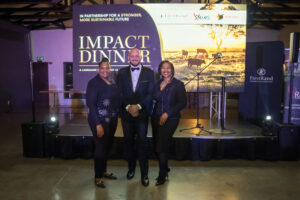
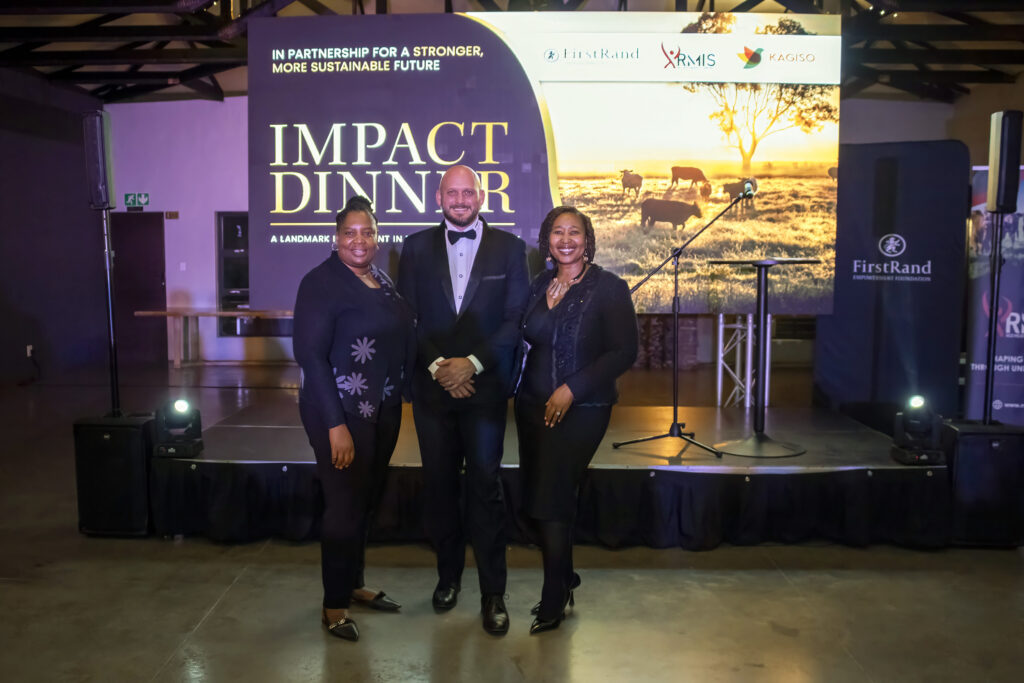
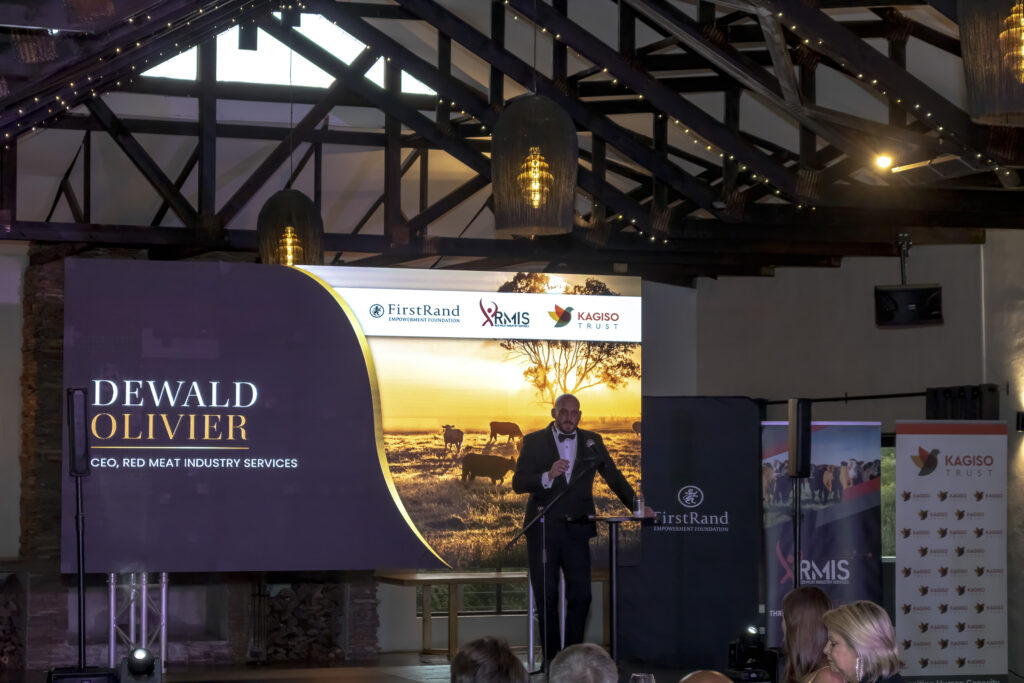
Opening the Impact Dinner, RMIS CEO Dewald Olivier reflected on the significance of this collaboration for South Africa’s red meat industry. RMIS COO Dr Phillip Oosthuizen presented the project’s progress, key milestones and expected outcomes, while FirstRand Foundations CEO Kone Gugushe and Kagiso Trust’s Quinton Naidoo shared perspectives on what the partnership means and its broader impact.
The event brought together government representatives, directors and management teams from the partner organisations, industry stakeholders and members of the media.
What began with a shared belief that more could be achieved together is already creating opportunities for young professionals, protecting livestock, strengthening traceability and supporting rural farmers.
Relevant Agribook pages include “Beef cattle farming.” The Business Listings comes from that page.
Business Listings
The following business listings are provided for informational purposes only. Agribook does not endorse or guarantee any of the listed businesses, their products, or services.
Afrikaner Cattle Breeders’ Society of SA
www.afrikanerbees.com
Agricultural Levy Services (ALS)
www.agrilevy.co.za
Angus SA
www.angus.org.za
Ankole Society of South Africa
ankolesa.org.za
Beefmaster Cattle Breeders Society of SA
beefmastersa.co.za
Bonsmara SA
bonsmara.co.za
Boran Cattle Breeders Society of SA
www.boran.org.za
Brahman SA Society
brahman.co.za
Brangus SA
www.facebook.com
Braunvieh SA
www.braunviehsa.co.za
Charolais Cattle Breeders Society of SA
www.charolais.co.za
Chianina SA
chianinasa.org
Drakensberger Breeders’ Society of South Africa
drakensbergers.co.za
Droughtmaster Cattle Breeders Society of SA
droughtmastersa.co.za
FMD Response SA
fmdresponsesa.co.za
Hugenoot SA Cattle Breeders Association
www.hugenootsa.co.za
Limousin Cattle Breeders Society of SA
www.limousinsa.co.za
Livestock Welfare Co-ordinating Committee (LWCC)
lwcc.org.za
Meat Industry Trust
meatindustrytrust.co.za
Nguni Cattle Breeders’ Society
www.nguni.co.za
Romagnola Cattle Breeders Society of SA
www.romagnola.co.za
SA Braford Cattle Breeders’ Society
www.braford.co.za
SA Dexter
www.dextersa.co.za
SA Gelbvieh Association
www.gelbvieh.co.za
SA Hereford Breeders’ Society
www.hereford.co.za
Santa Gertrudis Cattle Breeders Society of SA
www.santagertrudis.co.za
Senepol Cattle Breeders’ Society of SA
www.senepolsa.co.za
Simbra Cattle Breeders’ Society of SA
simbra.org
Simmentaler Cattle Breeders Society of SA
www.simmentaler.org
South African Meat Industry Company (SAMIC)
samic.co.za
South Devon Cattle Breeders Society of SA
www.southdevon.co.za
Tuli Cattle Breeders’ Society of SA
www.tulicattle.co.za
Wagyu Society of SA
wagyu.org.za
Afrikan Farms
www.afrikanfarms.co.za
AgriWebb
www.agriwebb.com
Balgowan Beef Company
balgowanbeef.com
Beefcor
www.beefcor.com
Beefmaster
beefmaster.co.za
Berlin Beef
berlinbeef.co.za
Beyond Beef
www.beyondbeef.co.za
Blaauwberg Feedlot
www.blaauwberggroup.co.za
Boomplaats
boomplaats.co.za
Braams Voerkrale
www.braams.co.za
Bull and Bush Meat Merchants
www.bullandbush.co.za
Chalmar Beef
www.chalmarbeef.co.za
Dargle Valley Meats
darglevalley.co.za
Doornplaat Group
www.doornplaatbeef.co.za
Dry Ice International
dryice.co.za
Farmer Angus
www.farmerangus.co.za
Frontier Bonsmaras
frontierbonsmaras.co.za
Hurwitz Farming
hurwitz.co.za
Karan Beef
www.karanbeef.com
MANJOH Foods
www.manjoh.co.za
Meadow Feeds
www.meadowfeeds.co.za
Midland Group
midlandmeat.co.za
Morgan Beef
www.morganbeef.co.za
Nu-Alcade
www.nualcadebonsmaras.co.za
Rhys Evans Group
re.co.za
Sernick
www.sernick.co.za
Sparta Beef
www.sparta.co.za
Theron Boerdery
www.theronboerdery.com
Triple C Feedlot
www.triplecfeedlot.co.za
Vencor
www.vencorh.co.za
Black Agricultural Commodities Federation (BACF)
bacf.africa
Grass Fed Meat Association of South Africa (GFASA)
www.facebook.com
National Livestock Farmers Association of South Africa (NaLFA-SA)
nalfasa.org.za
Red Meat Industry Services (RMIS)
www.rmis.co.za
Red Meat Producers Organisation (RPO)
rpo.co.za
Regenerative Agriculture Association of South Africa
www.regenagsa.org.za
SA Feedlot Association (SAFA)
safeedlot.co.za
Agricultural Levy Services (ALS)
www.agrilevy.co.za
Agricultural Research Council (ARC) – Animal Production (ARC-AP)
www.arc.agric.za
Beef and Lamb SA
beefandlambsa.com
Intelact South Africa
www.intelact.co.za
KARAN BEEF Academy
www.karanbeef.com
LRF Stockman School
www.lrf.co.za
Peritum Agri Institute
www.peritumagri.com
Red Meat Research and Development Trust (RMRDT)
www.rmrdt.co.za
Rhodes University (RU) – Institute of Social and Economic Research
www.ru.ac.za
Rothman Livestock Training Services
rltsafrica.com
SerDev
serdev.co.za
Skills For Africa
skillsafrica.co.za
Stellenbosch University (SU) – Animal Science
animal-science.sun.ac.za
University of Limpopo (UL) – Centre for Rural Community Empowerment
www.ul.ac.za
University of Pretoria (UP) – Production Animal Studies
www.up.ac.za