Written by PJ, owner of VELD FIRST, KAROO DIREK, DIE VEEPOS and KAROO-KALAHARI VEEVOER & LOGISTIEK
A prospective livestock farmer would be wise to base his selection of animal species and breeds on a number of key strategic, physical and financial imperatives.
This is what is referred to as building a risk profile. In this paper I will pay particular attention to the following, discussing these in much more detail:
- market economics,
- soil and veld,
- disease and parasite profiles, and
- capital and operating finances.
The suggested key factors, in no particular order of priority, include:
Weather patterns
- Temperature: some animals handle extreme heat well, while others need cold winters or cool shade.
- Rainfall: drier regions suit goats or sheep, whereas wetter regions are better suited to cattle or pigs.
- Wind: when accompanied by a drop in temperature and rain, wind causes a dangerous drop in ambient temperature which raises the risk of hypothermia.
- Daylight hours: this is referred to as photoperiodicity (see separate blog).
Feed and water
- Grazing quality: poor grass suits hardy local breeds. Rich pastures suit high-production dairy or beef breeds. A critical question the farmer needs to ask and answer upfront is: Will I need to consistently purchase supplemental feed to ensure and maintain productivity?
- Water access: animals like cattle and even sheep need large amounts of daily water. Boreholes, dams, irrigation systems and water reticulation are expensive infrastructure items to build. Rivers dry up and flood. Extreme temperatures freeze water and heat it beyond livestock tolerance levels. These factors should be taken into account.
Infrastructure, containment and labour requirements
- Extensive fencing: strong, durable fences keep large animals in and predators out. Sheep and goats require costly, predator-proof, multi-strand electric fencing compared to simpler cattle barriers.
- Handling pens and high-barrier housing: safe working areas make medical care and sorting easier. Commercial pigs and poultry require intensive, expensive climate-controlled housing and automated systems.
- Labour: Ensure you have enough trained, sober-of-habit, reliable workers to manage the daily needs of the animals. Good luck with this !

Above: PJ (photo supplied)
Market demand and access to market
Understanding market demand and access to markets will assist prospective livestock farmers avoid financial loss, match production to actual buyer needs, and ensure long-term sustainability and profitability of their farming operations.
- Matching product to consumer preference: knowing whether local buyers prefer specific types of livestock, for example grass-fed versus grain-fed beef, mutton versus lamb, or Boer goats versus wool sheep, prevents raising animals that nobody wants to buy. Research what retailers and the community of the area do not have easy, affordable access to. If practical and profitable, aim to supply these from your farm.
- Price realisation and profitability: high-demand products command better prices, whereas oversupplied or niche products without local appetite result in low farm-gate prices and squeezed margins.
- Production cycle alignment: product demand fluctuates seasonally, for example higher meat consumption during major holidays or festive seasons. Understanding these peaks allows farmers to time when their animals reach slaughter or selling weight.
- Transport and logistics costs: livestock are live cargo requiring specialized transport. If the farm is located too far from abattoirs, auctions, or processing plants, high transport fees can erase profit margins.
- Value chain and intermediary (agents) linkages: access determines whether a farmer sells directly to consumers, local butcheries, feedlots, or commercial exporters, each of which has strict volume, grade, and health certification requirements.
- Perishability and holding costs: unlike crops that can be stored, ready-to-market livestock continue to consume feed and water every day they remain unsold. Reliable market access ensures animals can be sold promptly without incurring extra feeding costs or weight loss.
- Regulatory and health compliance: official markets, such as commercial abattoirs or export channels, require strict traceability, inoculations, and disease-free certifications which informal markets may not demand.
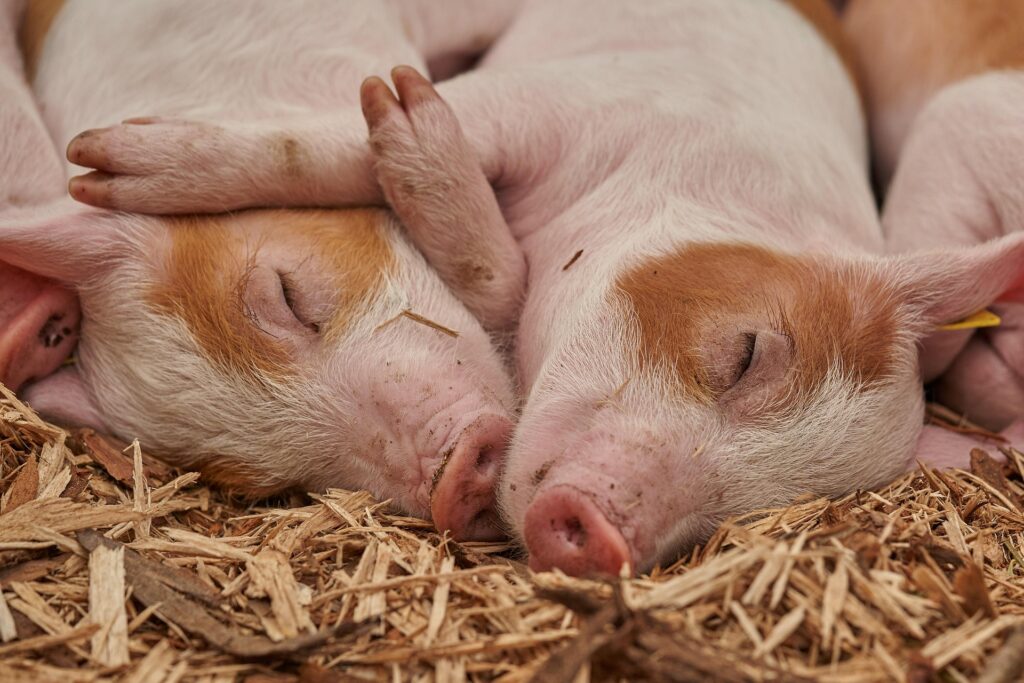
Above: Image by RoyBuri from Pixabay
Soil, veld and topography
Understanding soil, veld, and topography is critical because they directly dictate the type, quality, and quantity of natural forage available, as well as the physical capability of animals to traverse and use the land sustainably
Soil Type and Structure
- Nutrient availability and forage quality: soil mineral composition, such as phosphorus, calcium, and pH levels, determines the nutritional value and palatability of the grasses and shrubs that grow on it. For instance, sweetveld thrives on more fertile, higher-alkaline soils and stays nutritious year-round, whereas sourveld grows on leached, acidic soils where nutrients wash away, leaving plants unpalatable in winter.
- Erosion and physical stability: soil texture and structure influence how well the land absorbs water and resists erosion. Fragile or sandy soils break down quickly under heavy, cloven-hoofed animals, requiring lighter-impact breeds or lower stocking densities. The prospective purchaser of agricultural land should understand the differences in soil and veldt between the Swartland, Noorsveldt, Bushmanland and the Greater Karoo.
Veld and vegetation type
- Foragers versus grazers: the composition of the veld dictates which animal species will thrive. Wooded or shrub-heavy veld suits browsers like Boer goats, whereas open grassdominated veld suits grazers like beef or dairy cattle and wool sheep.
- Seasonal palatability: distinguishing between sweetveld, sourveld, and mixed veld helps farmers pick breeds that match seasonal feed cycles or plan supplemental feeding, including protein licks during dry or sour periods. Hardy indigenous breeds like the Nguni or Afrikaner handle harsh, low-input conditions better than high-output commercial breeds that need rich,
consistent feed.
Topography of the terrain
- Physical mobility and energy expenditure: steep, rocky, or mountainous terrain requires agile, sure-footed, and smaller-framed animals such as goats or hardy local sheep/cattle crosses, rather than heavy commercial cattle breeds that struggle or waste energy on slopes. Risk of serious injury and even death must be taken into account. The need for access of heavy machinery to challenging areas should not be forgotten
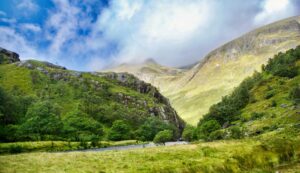
- Water run-off and microclimates: Slope angles, land gradients, and overall elevation dictates drainage, erosion risks, frost pockets, and where water pools. Flat or low-lying areas may risk waterlogging or high parasite loads in wet seasons, while steep gradients demand careful camp design and rotational grazing to prevent topsoil washouts.
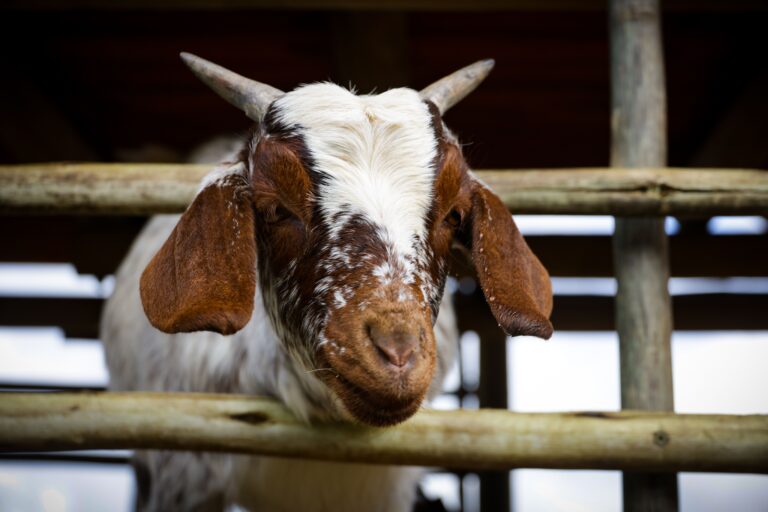
Photo: Magda Ehlers on Pexels
Exposure to disease and parasites
Understanding regional diseases and parasites is critical for prospective livestock farmers because it dictates the economic viability, animal welfare, and operational survival of the farm.
- Environmental, carrier and vector pressures: different geographic and agricultural districts feature distinct climates, rainfalls, and vegetation types that harbour specific vectors, including ticks, mosquitoes, and biting flies, as well as pathogens. Hot, humid, or bushencroached regions often have high loads of ticks carrying fatal tick-borne diseases like heartwater and redwater, or tsetse flies transmitting trypanosomiasis.
- Biosecurity and zoonosis interfaces: proximity to communal grazing lands, wildlife reserves, government land, residential locations or neighbouring farms increases the risk of cross-species transmission, for example rabies, foot-and-mouth disease, African swine fever, or bovine tuberculosis.
Disease zones: account for regional disease classifications, such as Foot-and-Mouth Disease zones, which can severely limit the producer’s ability to move or export livestock.
Traceability mandates and compliance: invest in breeds and management setups that easily comply with national livestock identification and traceability systems, which are increasingly required for premium markets. - Infrastructure and veterinary access: remote, un- or underdeveloped districts may lack reliable cold-chain supply for vaccines, local diagnostic laboratories, or prompt access to veterinary services, delaying outbreak responses.
- Natural / genetic resistance and adaptability to conditions: certain indigenous breeds, for example Nguni cattle or Boer goats, have evolved natural immunity or high resilience to endemic regional parasites and harsh local conditions. An excellent purchasing strategy is to select livestock species and breeds based on projected regional climate shifts, such as
choosing heat-tolerant composite or indigenous breeds, for example Boran or Brahman cattle, in areas facing rising temperatures and prolonged droughts. It is often wise to choose local or resilient breeds that resist regional diseases without the need for expensive, often imported, medicines.
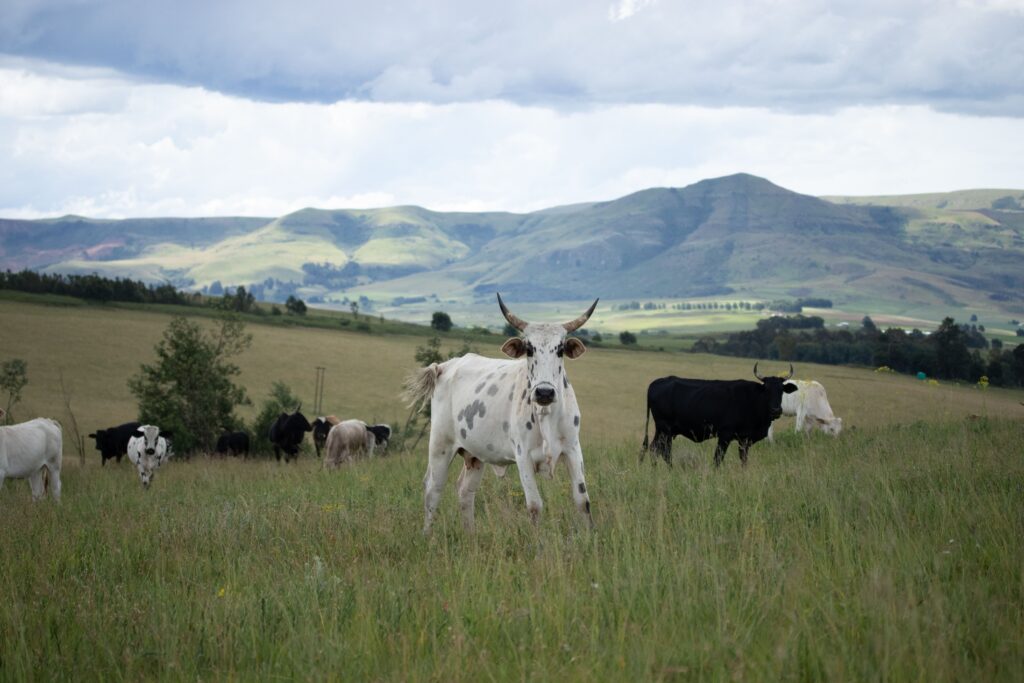
Photo: Ryan Lansdown on Pexels
- Susceptibility of commercial breeds: high-yielding commercial or exotic breeds, for example many European breeds of cattle and sheep, often lack local genetic adaptation. Placing them in a high-challenge district leads to high mortality, chronic stress, poor growth rates, and massive veterinary bills for dipping, drenching, dosing and other treatments and interventions.
- Management and financial trade-offs: choosing a sensitive breed in a high-risk area forces the farmer into an intensive, high-cost management system, for example constant housing, frequent chemical applications, and strict biosecurity, all of which can wipe out profit margins if the input costs outweigh market returns.
- Input efficiency: focus on the ‘Feed Conversion Ratio’ (FCR) – the efficiency with which an animal converts feed into meat or milk. Improved FCRs go some way to protecting profit margins against rising feed and energy costs.
- Direct production losses: parasites and diseases reduce feed conversion efficiency, lower weight gains, decrease milk or wool yields, impair reproduction, and cause animal deaths.
- Preventative versus curative costs: knowing the local disease baseline helps a farmer budget accurately for mandatory vaccinations, parasiticides, fencing, and quarantine facilities rather than facing unexpected catastrophic losses.
Financial viability and sustainability of the operation
Capital, operating cash and income requirements
- Available capital is the ultimate filter that dictates the scale, velocity, and risk profile of a livestock operation.
- It determines not just which species you can buy, but how long you can survive for, until the farm becomes profitable.
Cash flow requirements and ‘Return-on-Investment’ expectations
- Low (slow) velocity: cattle require 1.5 to 3 years from birth to market, trapping capital in inventory for long periods.
- High (fast) velocity: broilers (poultry) mature in 6 to 8 weeks, generating rapid cash flow to reinvest or cover operating overheads.
Capital costs
- Cattle and game: high initial cost per head, requiring substantial upfront investment for a viable herd.
- Poultry, pigs and small ruminants: relative low cost per animal, allowing entry with minimal capital and fast herd rebuilding.
Feed and operating reserves
- Breeding cycle lag: capital and operating cash-flow must cover infrastructure requirements, feed, veterinary care, and labour during the months before any product is sold.
- Feed leverage: intensive systems, such as the models followed by many pig, poultry and now even sheep farmers, rely entirely on purchased feed, creating heavy weekly cash requirements.
Capital Alignment Strategy
Capital available | Recommended strategy | Typical species |
Low (<R200k) | High-turnover, low-infrastructure microfarming. | Broilers, layers, or a small starter flock of local goats. |
Medium (R250k – R1mn) | Multi-species grazing with basic boundary infrastructure. | Sheep, weaner beef calves, or smallscale pastured pork. |
High (>R1.5m+) | Intensive commercial production or longterm cow-calf operations. | Dairy cattle, commercial beef herds, or intensive swine facilities. |