Written by Izaak Breitenbach, CEO of the Broiler Organisation of the South African Poultry Association (SAPA)
Right now, South Africa’s trade regulator is deciding whether to maintain anti-dumping duties on certain frozen bone-in chicken portions from Germany, the Netherlands and the United Kingdom.
Introduced in 2015/16 and extended in 2021, these duties exist to protect local poultry producers from unfair global competition. In August, following an application by the South African Poultry Association (SAPA), the International Trade Administration Commission (ITAC) opened a formal sunset review
While ITAC has yet to make a final ruling, public debate continues to intensify.
As SAPA, we believe it is our duty to clarify what is truly at stake.

Above: Izaak Breitenbach, CEO of the Broiler Organisation of the South African Poultry Association (SAPA) (photo supplied)
A duty is not a ban
Let me be absolutely clear. A duty isn’t a ban. Despite what detractors may want you to believe, nobody in local poultry is attempting to halt imports. We’re simply asking ITAC to ensure fair pricing. Imported chicken should compete on South African shelves at prices that aren’t far below what it would sell for in its country of origin.
That is not merely about protecting local producers. It’s how trade law is meant to work. Whether that law still works here will determine the future of South Africa’s largest agricultural industry.
What these duties are, and aren’t
Dumping happens when a product is exported at less than its normal value in the exporter’s home market. Where that harms a domestic industry, trade law allows the importing country to impose a duty that closes the gap.
These duties only apply to certain frozen bone-in chicken portions, not all chicken imports.
Dumping does its worst harm when smaller economies have to compete with much larger exporters selling surplus products at unfairly low prices.
The test is the right one
ITAC is now conducting a sunset review. It must decide whether letting the duties lapse would probably lead to more dumping and material injury to the local industry. In August, it found enough preliminary evidence to investigate SAPA’s application.
Some industry organisations have challenged our calculations, including the export price used to estimate German dumping, where no direct imports into South Africa were recorded. That is their right, and testing numbers is exactly what a review is for. The margins we have proposed are the figures in SAPA’s application, not rates set by ITAC. We expect them to be verified. And we expect any industry objections to be tested with just as much scrutiny.
Until ITAC announces its decision, the existing duties remain in place. But why are we making such a fuss?
The stakes are high
According to SAPA statistics, poultry is South Africa’s number one agricultural commodity. It’s worth R74 billion in gross value. It accounts for 58% of the meat market. Local producers slaughter an average of 22.3 million broilers a week to keep up with demand. More than 110,000 people work across the local poultry industry’s extended value chain.
It wasn’t so long ago that this industry was in trouble. After the 2019 Poultry Sector Master Plan, producers committed more than R2.2 billion in new investment against a target of R1.5 billion helping to make South Africa the second most competitive poultry producer in the world after Brazil.
Duties and trade remedies, along with bird flu outbreaks in the northern hemisphere, have helped reduce dumped imports. Local poultry turnover has since grown to R74 billion.
Cheap isn’t the same as fair
Industry players are arguing that low-income households need affordable protein. We agree. Chicken is one of the most affordable sources of protein for South Africans. Keeping it that way is what SAPA exists to do.
Importers say they bring cheaper chicken to market. Whether that saving reaches the shopper is a question for shelf-price evidence, not assertion. That is why we welcome the Competition Commission’s inquiry into the poultry value chain. We’ve even asked for it to be fast-tracked.
So, three things must happen now.
First, ITAC must test every figure on the record, ours and other industry players, against current evidence, and publish its findings.
Second, it must decide based on the evidence, not on who has made the most public noise.
Third, government must treat this decision as the test it is. The 2019 Master Plan committed it to restoring the effectiveness of trade remedies to bolster local industry. Producers invested on that promise.
South Africa shouldn’t have to choose between affordable chicken and a viable poultry industry. Fair trade is how we keep both.
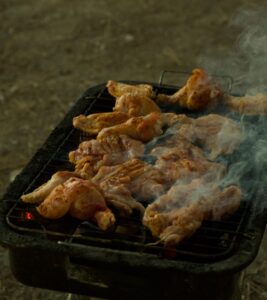
Feature photo: Büşranur Aydın on Pexels
Relevant Agribook pages include “Poultry and chicken farming.” The Business Listings below comes from that page.