Press release
A landmark report identifies the most critical landscapes for safeguarding South Africa’s water security and sets out a strategic plan to protect and restore these essential water source areas for future generations.
While public attention often focuses on the infrastructure that delivers water to homes, businesses and communities, the report highlights the urgent need to protect the high-altitude natural landscapes that supply the country’s rivers and dams.
These strategic water source areas (SWSAs) provide approximately 50% of South Africa’s surface freshwater, despite covering only 10% of the country’s land area.
Commissioned by WWF South Africa and prepared by Conservation Outcomes, the report is titled “Prioritising a water-secure future for South Africa: a plan to protect each strategic water source area”.
The study builds on the national identification of SWSAs completed in 2021, covering more than 10 million hectares across South Africa. It aims to guide coordinated management, restoration and protection efforts to secure the country’s water supply in the face of mounting pressures from climate change, environmental degradation and increasing demand.
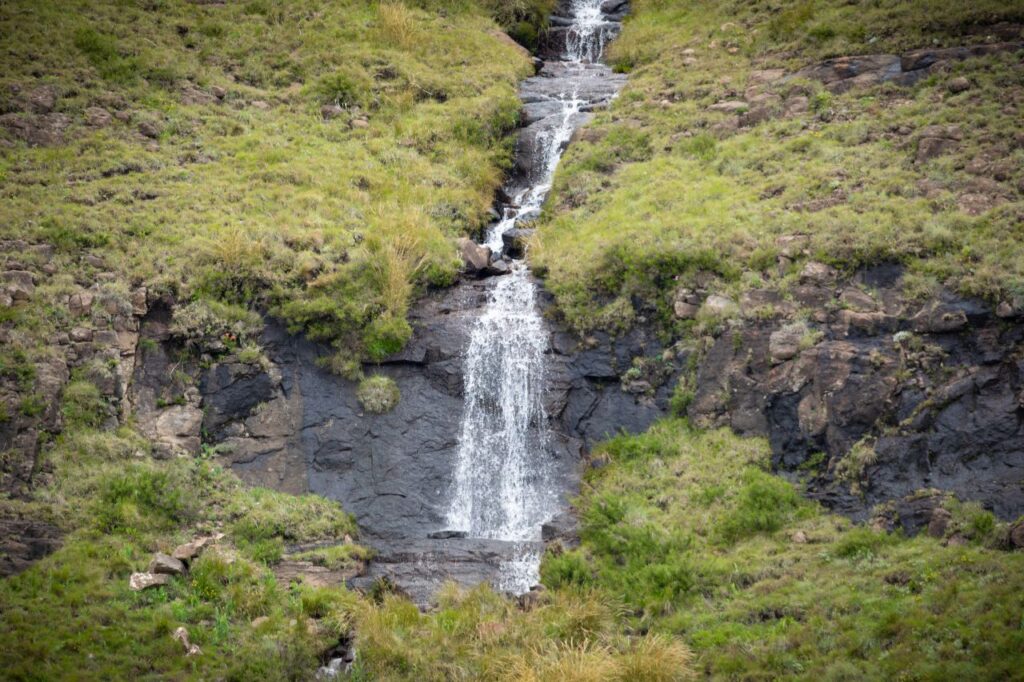
Photo credit: Angus Burns/WWF South Africa
For each of the country’s 22 SWSAs, the plan outlines targeted interventions, investment priorities and governance actions needed to ensure the long-term sustainability of these critical landscapes. It identifies the top 50% of each SWSA crucial for securing biodiversity, water resources and human well-being.
The document reveals that only 19.3% of South Africa’s SWSAs, equivalent to around 2.5 million hectares, are currently under formal protection.
However, it also identifies significant opportunities to expand the security of these critical landscapes through new biodiversity stewardship agreements adding close to another 50%. This includes private stewardship opportunities (28%), community stewardship opportunities (12.8%) and the potential recognition of an additional 8.8% as other effective area-based conservation measures (OECMs). These mechanisms provide important pathways to strengthen long-term conservation and sustainable land management beyond traditional protected areas.
The Eastern Cape Drakensberg and Amathole SWSAs are highlighted as priority landscapes requiring greater protection and long-term security. Strengthening conservation efforts in these areas is critical for safeguarding important freshwater ecosystems, maintaining water supply and supporting the communities and economic activities dependent on them.
“South Africa’s water crisis cannot be solved through infrastructure investment alone. As a water scarce country, now more than ever, we must actively restore and protect the natural places where our water comes from,” says WWF South Africa’s Senior Freshwater Technical Specialist Silindile Mtshali.
“SWSAs are our natural water factories. If these landscapes are degraded, the rivers and dams that millions of South Africans depend on will be compromised. This plan provides a practical roadmap for protecting these vital areas and securing water for people, communities, agriculture and the economy.”
The release of the plan comes at a critical time for South Africa’s water sector. Recent national initiatives, including the government’s 2026 National Water Action Plan and the development of a national framework for securing SWSAs, have highlighted the need for a more comprehensive approach to water security that combines infrastructure improvements with the protection of natural ecosystems.
Relevant Agribook pages include the general “Water” one. The Business Listings below comes from that page.