Press release
Red Meat Industry Services (RMIS), in collaboration with the University of Pretoria and Zoetis, has launched a research initiative to investigate one of the red meat industry’s most costly challenges: the economic impact of Foot-and-Mouth Disease (FMD) virus persistence in slaughtered cattle.
The study, “Evidence-Based Risk Reduction for FMD Virus Persistence at Slaughter”, will generate the scientific evidence required to revise current slaughter regulations that impose blanket restrictions on meat from FMD-recovered cattle. These restrictions are not only outdated but also result in significant wastage, especially of offal and other by-products, causing financial strain across the red meat value chain.
Led by Professor Armanda Bastos from the Faculty of Veterinary Science at the University of Pretoria, the expected outcomes include:
- Phase 1A: Determine if deboning is necessary at 15 days post-Day Zero and quantify carrier prevalence
- Phase 1B: Identify virus persistence sites in heads, glands, and offal to guide safe trade and policy revision
- Phase 2: Develop a serological test to distinguish carriers from recovered animals, as a critical first step to development of pen-side screening tests
- Phase 3: Assess the impact of different vaccines on virus clearance
The project, along with eight others, is a direct response to RMIS’s Field to Future framework, an industry-informed process to identify the real-world challenges faced by farmers, feedlots, abattoirs, and other value chain stakeholders.
“This is one of the most important research investments RMIS will make,” said Dewald Olivier, CEO of RMIS. “Foot-and-Mouth Disease continues to cost the red meat industry millions in lost value every year because of outdated regulations that don’t reflect current science. This research is about changing that, to protect the livelihoods of every role player in the red meat value chain.”
Prof Armanda Bastos, Director of the Hans Hoheisen Research Centre in the Kruger National Park stressed that: “The research showcases the rapid strides that can be made when different sectors pool expertise and resources to address the wide-reaching regulatory impacts of FMD. It will set a new benchmark for evidence-led, rapid response to the SAT-type virus outbreaks.”
Dr Ralf J. Patzelt, Business Unit Director, Livestock at Zoetis, shared the following:
“As the world’s leading animal health company, we are fully committed to the wellbeing and sustainability of the red meat industry in South Africa. By sponsoring this crucial research project together with the University of Pretoria and the Red Meat Industry Services (RMIS) we are demonstrating our dedication to supporting everyone involved in the red meat value chain, from producers and feedlots to processors and marketers.”
“Foot and Mouth Disease (FMD) poses significant challenges to the industry, leading to extensive losses and threatening livelihoods. Our support for this study reflects our determination to help the industry find science-based solutions that minimise wastage, strengthen regulatory confidence, and safeguard trade credibility. We believe that investing in evidence-based FMD risk management is essential for the future resilience and growth of South Africa’s livestock sector.”
“Through this sponsorship, we reaffirm our commitment to partnership, innovation, and the advancement of animal health. Together, we aim to reduce unnecessary losses caused by FMD and contribute to a more sustainable and prosperous future for all stakeholders in the red meat industry.”
Want to learn more about the research RMIS funds?
https://rmis.co.za/research/
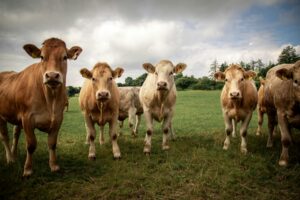
Photo by Michael Starkie on Unsplash